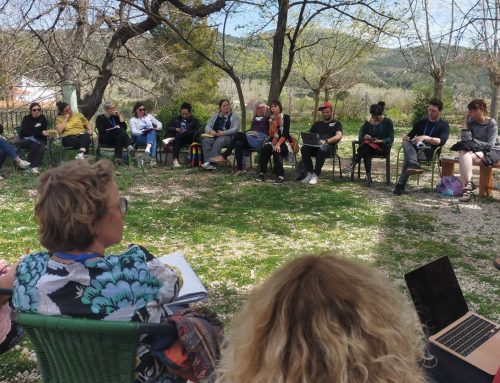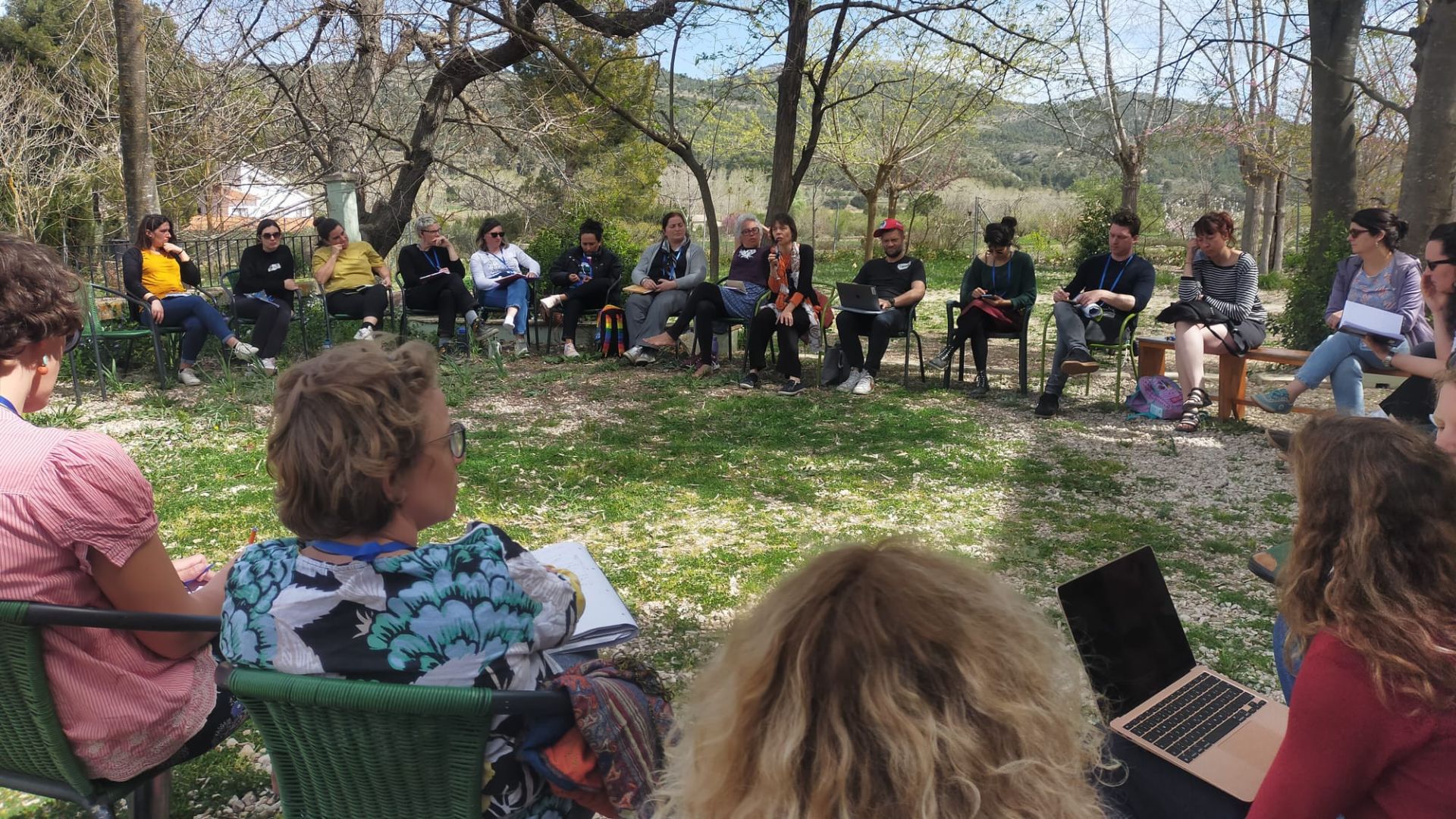
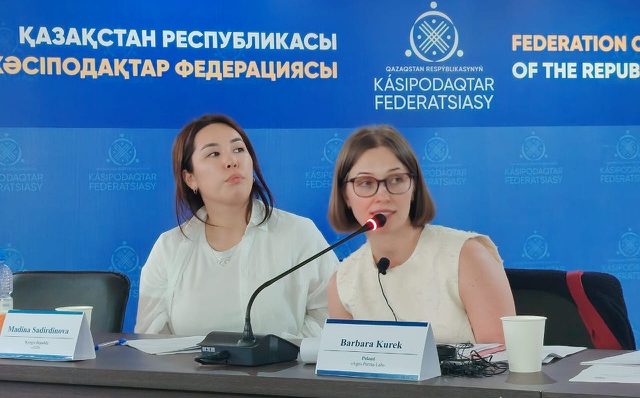
From June 23 to 27, 2026, the Bilim Alliance Agroecology Forum for Eastern Europe and Central-Western Asia took place in Astana, Kazakhstan. This year’s gathering built on a growing regional dialogue, following previous successful editions in Bursa, Turkey (2023) and Chișinău, Moldova (2025).
The event brought together delegates from 17 countries—including Poland, represented by the Agro-Perma-Lab Foundation—uniting farmers, researchers, activists, and FAO representatives around a shared vision of resilient food systems.
“Agroecology is about so much more than farming techniques. It is about rights, culture, education, local economies, biodiversity, and empowering communities to shape their own food and agricultural systems.”
— Gordana Đurić, Co-Chair of the Bilim Alliance
Over those few days, we were reminded time and again of what lies at the very heart of agroecology:
- It’s about people, not just agricultural practices. Agroecology is a holistic movement that brings together biodiversity, climate action, food sovereignty, and social justice.
- Keeping knowledge and data in farmers’ hands. How we manage the data and knowledge gathered on our farms is absolutely critical for our food sovereignty and security.
- Women and youth leading the way. Across the region, it is women and young people who are driving the change, advocating for regenerative farming, and rebuilding local communities.
POLAND’S VOICE IN ASTANA
The Polish delegation from Agro-Perma-Lab brought hands-on experience to Kazakhstan, contributing to discussions on topics that lie at the very core of our Foundation’s mission:
The vital role of women and youth
Agro-Perma-Lab highlighted how essential women and the younger generation are to the growth of agroecology in Poland. At the same time, our delegation raised a crucial question: how do we keep people motivated and prevent burnout among those already dedicated to the movement?
The Polish School of Agroecology
We also shared our experience running the Polish School of Agroecology, an initiative co-organized by Agro-Perma-Lab and the Heinrich Böll Foundation in Warsaw. This educational and networking project brings people together through hands-on gatherings on organic farms. By using a “dialogue of knowledges” (diálogo de saberes) approach, it builds a strong, multi-sector community of leaders ready to transform our food system.
How do the big ideas from Astana translate to Poland?
1. Biodiversity starts with a single seed
During the forum, seeds were beautifully described as “living repositories of history and identity.” For Poland, this highlights the need to revive local seed banks, seed libraries, and seed houses, protect native varieties (like heritage fruit trees), and develop evolutionary crops that can naturally adapt to changing climates.
2. Digital sovereignty and farming knowledge
As big tech corporations take control of soil and yield data through precision farming, the forum was a powerful reminder: we need digital tools that are owned and managed by farming communities themselves. This is the only way to protect our shared knowledge from being patented and to free ourselves from corporate dependence.
3. Short supply chains and PGS schemes
Our colleagues from Moldova shared the inspiring success of their EcoLocal initiative and their experience with Participatory Guarantee Systems (PGS). PGS offers an alternative to expensive eco-certification, relying instead on mutual trust, transparency, and direct relationships between farmers and consumers.
A FEW CLOSING THOUGHTS
Biodiversity and agroecology are our best—and perhaps only—shield against the climate crisis. Yet, the most powerful thing we brought back from Kazakhstan wasn’t just knowledge, but the incredible energy of this community.
The Bilim Alliance is one of those rare spaces where there is no room for grumbling, skepticism, or resignation. No one here believes that real change is impossible. This isn’t blind optimism; it is a deep, shared conviction that this path is the only right way forward. Every project and story shared was tangible proof that this change is already happening.
The agroecological movement is powered by remarkably strong, determined people—leaders who refuse to back down in the face of economic crises, systemic hurdles, or extreme weather. Step by step, we are building a new reality.
Three editions of the Bilim Alliance Forum (Turkey, Moldova, and now Kazakhstan) have shown us that we are not doing this work in isolation. We are back home with a renewed sense of purpose—because the future of agriculture is not something we can build alone.
The event was supported by the Agroecology Fund, Schola Campesina, and Zher Ana Astana.
Our participation was made possible thanks to the generous support of SWIFT – Supporting Women-Led Innovations in Farming and Rural Territories https://swiftproject.eu/